
A Trump Card in the Education Industry?
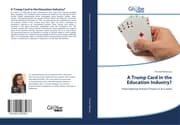
International School Choice in Sri Lanka
€79.90
(inklusive MwSt.)
Verfügbarkeit: Titel wird für Sie produziert, Festbezug, bitte vormerken
Zusatztext
Sri Lanka is a multi-cultural state comprising of four major ethnic groups speaking three languages. The Swabasha policy requires all students to be educated in their mother tongue perpetuating ethnic segregation along linguistic divides. State-owned, semi-governmental and private schools follow the National Curriculum under the Ministry for Education. In 1961, Sri Lanka banned the establishment of any new private schools in the country. Since then, there has been a profusion of institutions claiming to be International Schools. These schools exist within a loophole in the legal framework, established under the Companys Act. This research outlines the reasons behind international school popularity and unpacks some of the anxieties that this education system has given rise to in recent times. The theoretical basis lies on Bourdieus concept of cultural capital as well as global identity formation; the verdict being that English proficiency and foreign credentials allow for a competitive edge in neo-liberal times yet grounding oneself in the local culture is of paramount importance if education is to be truly international.
Autorenportrait
Dr. Virandi Wettewa was awarded her PhD in Education from the University of Sydney for her research on Sri Lankan International Schools. She is the author of several peer-reviewed journal articles and international conference proceedings. She is currently working as a Lecturer in Environment & Development at Trinity College, University of Melbourne
Weitere Details
Erschienen: 06.04.2018
Umfang: 336 S.
Sprache: ENG
Einband: KT
Format: 2.1 x 22 x 15 cm
ISBN/EAN: 9786202487986
Umbreit-Nr.: 4954902
