
Musik bezieht Stellung
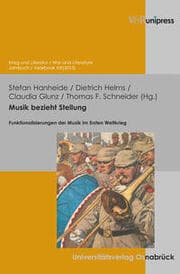
Funktionalisierungen der Musik im Ersten Weltkrieg, Krieg und Literatur/War and Literature XIX, Krieg und Literatur /War and Literature XIX, Jahr, International Yearbook on War and Anti-War Literature
Stefan Hanheide/Dietrich Helms/Claudia Junk u a
Als erster moderner Krieg ist der Erste Weltkrieg für die Funktionalisierung der Musik richtungsweisend. Während alte Traditionen wie das Soldatenlied noch wichtig sind, werden für die Propaganda neue Medien erprobt, wie z.B. die Schallplatte. Schlager aus Operetten und Revuen beginnen jene Funktionen zu übernehmen, die vorher Volkslieder hatten. Diese vielfältigen Rollen der Musik im Ersten Weltkrieg untersuchen die Beiträge dieses Bandes. Dabei beleuchten die Autoren das Thema aus unterschiedlichen Blickwinkeln: Wie wurde in der Propaganda mit Musik gekämpft? Wie nutzten Soldaten im Feld die Musik, um zu überleben? Und schließlich: Wie wurde der Krieg in der Musik verarbeitet?
€50.00
(inklusive MwSt.)
Verfügbarkeit: Besorgungstitel, Festbezug
Zusatztext
On the battlefields of world history, music has had many functions. It is exploited by propaganda to hound the enemy, and battle songs are used to drive out fear and vilify the enemy. Soldiers sing and play music to find solace in the madness of war and to remain human. The First World War - the first modern war - led the way in the functionalisation of music. While old traditions such as the soldier song still had their importance, new media such as the gramaphone record were tested for propagandistic ends. Popular songs from operettas and chorus songs began to take over the function that folk songs previously had. The diverse roles of music in the first World War are examined in the contributions to this volume. The authors shed light on the theme from different perspectives. How was music used in propaganda to fight the enemy? How did soldiers in the trenches use music to survive? And, finally, how was the theme of war dealt with in music?
Autorenportrait
Claudia Glunz ist Mitarbeiterin des Erich Maria Remarque-Friedenszentrums an der Universität Osnabrück. Prof. Dr. Stefan Hanheide lehrt Historische Musikwissenschaft an der Universität Osnabrück. Prof. Dr. Dietrich Helms lehrt Historische Musikwissenschaft an der Universität Osnabrück. Dr. Thomas F. Schneider leitet das Erich Maria Remarque-Friedenszentrums und lehrt Neuere Deutsche Literatur an der Universität Osnabrück.
Weitere Details
Erschienen: 11.12.2013
Umfang: 470 S.
Sprache: Deutsch
Einband: KT
Format: 3.2 x 24 x 15.8 cm
ISBN/EAN: 9783847102069
Umbreit-Nr.: 6047417
