
Dilectus ciborum
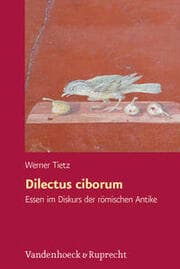
Essen im Diskurs der römischen Antike, Hypomnemata Band 193, Hypomnemata 193, Untersuchungen zur Antike und zu ihrem Nachleben
Das Essen wird in der römischen Literatur häufig als Symbol für nicht-kulinarische Sachverhalte verwendet. So repräsentiert die Erwähnung besonders zubereiteter Speisen gewisse Verhaltensweisen des Verzehrenden. Werner Tietz untersucht den Zeichencharakter von Essen in der römischen Gesellschaft und dessen Bedeutung für die soziale Kommunikation unter besonderer Berücksichtigung des Diskurses über den mos maiorum, die um 200 v. Chr. erstmals zu beobachtende Auseinandersetzung mit den Kulturgütern der hellenistischen Welt.
€120.00
(inklusive MwSt.)
Verfügbarkeit: Besorgungstitel, Festbezug
Zusatztext
This work deals with food as a sign or symbol in ancient Roman society. Of major relevance for such a field of research is the mos maiorum, the construed but normative way ones forebears were said to have lived. Especially encounters with Greek culture lead the Romans to become aware of their own identity. Considering above all the mos maiorum, this book undertakes an examination of the various fields in which food worked as a social sign. Under scrutiny are, amongst others, questions of prestige, gift exchange, and identity. These fields are approached mostly from a dichotomic angle, e.g. with regard to social and cultural differences between city dwellers and the rural populace or Romans and non-Romans. Further attention is paid to phenomena of transgression. This regards gender and sexuality of the eaters as well as the substance and the quantity of the things consumed. To sum up, in every field described, food worked as a social symbol through which all kinds of meaning could be communicated, both in reality by the ancient Romans and in literature by the Roman writers.
Weitere Details
Erschienen: 18.09.2013
Umfang: 408 S., 1 Illustr., 1 Foto, 1 Abb.
Sprache: Deutsch
Einband: GEB
Format: 3.3 x 23.8 x 16.4 cm
ISBN/EAN: 9783525253014
Umbreit-Nr.: 5658760
