
Exoplanets: The Search for Earths Twin
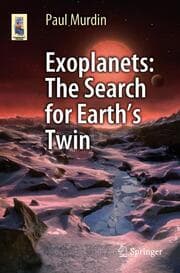
Astronomers' Universe
€26.74
(inklusive MwSt.)
Verfügbarkeit: Noch nicht erschienen, Bestellung ist vorgemerkt
Zusatztext
It has been recognised for centuries that, statistically, the Earth must be one of many, literally billions, of planets in our Galaxy, but the first planets beyond the solar system were recognised only 30 years ago. This book sets out to show the variety of the over 6,000 planets orbiting other stars that are now known by describing 50 of them. Few resemble our own Earth, although the largest telescopes and the most advanced spacecraft have been deployed to find them, as well as smaller scale projects operated by less wealthy but clever scientists, including amateurs and students. While we have no indications yet of new life and new civilisations, we have definitively found strange new worlds, some stranger than either science or science fiction has previously imagined. Rocky worlds like the Moon, some stiflingly hot, some icecovered, one or two tantalisingly like the Earth in some respects A planetary system with seven planets, some of them Earthsized and in the habitable zone of the system where liquid water and therefore life are possible An oceancovered planet, like Earth in Kevin Costner's film Waterworld, apparently with chemical biosignatures A world covered with volcanoes; one side permanently lit up by hot lava outflows A zombie planetary system of three planets, reformed from the body of an exploded star, orbiting a star that is not quite dead Planets orbiting a double star (two stars like our Sun), like Tattooine in Star Wars, some with a disorientingly complex day/night cycle A planet in a star cluster whose nighttime skies are ablaze with the light of a million stars A giant planet with one side perpetually facing its sun, roasting, with superheated gales blowing into the cold side, carrying glass rain The book describes the discovery of the selected planets: the how, the who, the determination, the luck and the feuds. Each planets wider planetary system is mapped out. The constitution of each planet is described, with the most significant conclusions about its surface and atmosphere, and comparing each to Earth. Each entry is written within the limits of scientific knowledge, a sedentary exploration of each strange new world, extrapolated from but firmly grounded in the science. Within the book's chapters there are descriptions of the various classes of worlds recognised by planetary scientists and their techniques. The author ends by discussing what makes a world habitable and how close we have come to discovering a planetary system like ours and a planet like Earth - or even one that is better for life to live on.
Autorenportrait
Paul Murdin was formerly astronomer at the Royal Greenwich Observatory and the Anglo Australian Observatory, head of operations at the Isaac Newton Group, La Palma, Director Royal Observatory, Edinburgh, Director of Science British National Space Centre, Head of Astronomy Particle Physics and Astronomy Research Council, UK, Treasurer Royal Astronomical Society. He is author/co-author/editor of about 200 refereed astronomical papers, and 25 books about astronomy. He has been awarded Officer of the Order of the British Empire in 1988.
Weitere Details
Erschienen: 12.07.2026
Umfang: ix, 163 S., 1 s/w Illustr., 27 farbige Illustr., 1
Sprache: ENG
Einband: KT
ISBN/EAN: 9783032226839
Umbreit-Nr.: 9983947
