
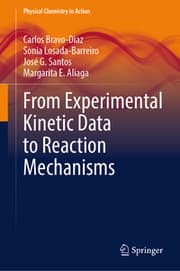
From Experimental Kinetic Data to Reaction Mechanisms
eBook - Chemistry and Material Science (R0)
Bravo-Diaz, Carlos/Losada-Barreiro, Sonia/Santos, José G et al
€111.95
(inklusive MwSt.)
Verfügbarkeit: Lieferbar
Zusatztext
<p><span lang="EN-US" style="font-size: 12.0pt; font-family: 'Calibri',sans-serif; mso-fareast-font-family: Calibri; mso-fareast-theme-font: minor-latin; border: none windowtext 1.0pt; mso-border-alt: none windowtext 0cm; padding: 0cm; mso-ansi-language: EN-US; mso-fareast-language: ES; mso-bidi-language: AR-SA;">This textbook offers a deep dive into practical kinetics in solution, providing a comprehensive overview of the techniques and methods used to monitor chemical reactions. It addresses fundamental questions about reaction rates, rate laws, and the intricate dynamics of chemical processes. By connecting various experimental aspects required for kinetic and mechanistic research, it guides students on how to obtain, treat, and interpret experimental data to gain realistic mechanistic insights.</span></p> <p><span lang="EN-US" style="font-size: 12.0pt; font-family: 'Calibri',sans-serif; mso-fareast-font-family: Calibri; mso-fareast-theme-font: minor-latin; border: none windowtext 1.0pt; mso-border-alt: none windowtext 0cm; padding: 0cm; mso-ansi-language: EN-US; mso-fareast-language: ES; mso-bidi-language: AR-SA;">Divided into nine chapters, the textbook begins with an introduction to the basic concepts of chemical kinetics and an experimental perspective on monitoring chemical reactions. Subsequent chapters cover complex reactions, offering insights into simplifying reaction schemes through steady-state and pre-equilibrium approximations. Special attention is given to reactions in solution, highlighting diffusion-controlled and activation-controlled reactions, as well as the role of catalysis. The authors provide expert analyses of chemical reactivity in multiphasic systems, such as microemulsions and emulsions, offering a detailed understanding of these complex environments.</span></p> <p><span lang="EN-US" style="font-size: 12.0pt; font-family: 'Calibri',sans-serif; mso-fareast-font-family: Calibri; mso-fareast-theme-font: minor-latin; border: none windowtext 1.0pt; mso-border-alt: none windowtext 0cm; padding: 0cm; mso-ansi-language: EN-US; mso-fareast-language: ES; mso-bidi-language: AR-SA;"><span lang="EN-US" style="font-size: 12.0pt; font-family: 'Calibri',sans-serif; mso-fareast-font-family: Calibri; mso-fareast-theme-font: minor-latin; border: none windowtext 1.0pt; mso-border-alt: none windowtext 0cm; padding: 0cm; mso-ansi-language: EN-US; mso-fareast-language: ES; mso-bidi-language: AR-SA;">The textbook also focuses on the analysis of kinetic data, including the effects of solution composition. It explores non-linear regression analyses, residuals, dataset size, noise, fitting functions, and the limits of fitting algorithms. Additionally, it presents comparisons between fitting data and experimental data, providing readers with valuable insights. </span></span></p> <p class="MsoNormal" style="background: white; vertical-align: baseline;"><span lang="EN-US" style="font-family: 'Calibri',sans-serif; border: none windowtext 1.0pt; mso-border-alt: none windowtext 0cm; padding: 0cm; mso-ansi-language: EN-US; mso-fareast-language: ES;">This textbook is an invaluable resource for upper-undergraduate and graduate students conducting research in reaction kinetics. It is also essential for researchers and practitioners in chemistry, particularly those interested in reaction kinetics and chemical reactivity. With contributions from leading experts, this volume is a must-read for anyone looking to advance their understanding of chemical kinetics.</span></p>
Autorenportrait
<p><strong><span lang="EN-US" style="font-size: 11.0pt; font-family: 'Calibri',sans-serif; mso-ascii-theme-font: minor-latin; mso-fareast-font-family: Calibri; mso-fareast-theme-font: minor-latin; mso-hansi-theme-font: minor-latin; mso-bidi-theme-font: minor-latin; border: none windowtext 1.0pt; mso-border-alt: none windowtext 0cm; padding: 0cm; mso-ansi-language: EN-US; mso-fareast-language: ES;">Carlos D. Bravo-Díaz</span></strong><span lang="EN-US" style="font-size: 11.0pt; font-family: 'Calibri',sans-serif; mso-ascii-theme-font: minor-latin; mso-fareast-font-family: Calibri; mso-fareast-theme-font: minor-latin; mso-hansi-theme-font: minor-latin; mso-bidi-theme-font: minor-latin; border: none windowtext 1.0pt; mso-border-alt: none windowtext 0cm; padding: 0cm; mso-ansi-language: EN-US; mso-fareast-language: ES;"> is a Full Professor of Physical Chemistry at the University of Vigo, Spain, and an Honorary Professor at Marie Curie Sklodowska University. With a PhD from the University of Santiago de Compostela, Spain, his research focuses on chemical reactivity in bulk solutions and multiphasic colloidal systems. He has published over 150 peer-reviewed papers and several book chapters, and has advised numerous postdoctoral, PhD, and graduate students. His collaborations span across Portugal, Chile, USA, Brazil, Poland, and Italy.</span></p> <p><span lang="EN-US" style="font-size: 11.0pt; font-family: 'Calibri',sans-serif; mso-ascii-theme-font: minor-latin; mso-fareast-font-family: Calibri; mso-fareast-theme-font: minor-latin; mso-hansi-theme-font: minor-latin; mso-bidi-theme-font: minor-latin; border: none windowtext 1.0pt; mso-border-alt: none windowtext 0cm; padding: 0cm; mso-ansi-language: EN-US; mso-fareast-language: ES;"><strong><span lang="EN-US" style="font-size: 11.0pt; font-family: 'Calibri',sans-serif; mso-ascii-theme-font: minor-latin; mso-fareast-font-family: Calibri; mso-fareast-theme-font: minor-latin; mso-hansi-theme-font: minor-latin; mso-bidi-theme-font: minor-latin; border: none windowtext 1.0pt; mso-border-alt: none windowtext 0cm; padding: 0cm; mso-ansi-language: EN-US; mso-fareast-language: ES; mso-bidi-language: AR-SA;">Sonia Losada-Barreiro</span></strong><span lang="EN-US" style="font-size: 11.0pt; font-family: 'Calibri',sans-serif; mso-ascii-theme-font: minor-latin; mso-fareast-font-family: Calibri; mso-fareast-theme-font: minor-latin; mso-hansi-theme-font: minor-latin; mso-bidi-theme-font: minor-latin; border: none windowtext 1.0pt; mso-border-alt: none windowtext 0cm; padding: 0cm; mso-ansi-language: EN-US; mso-fareast-language: ES; mso-bidi-language: AR-SA;"> is a Professor of Physical Chemistry at the University of Vigo, Spain. She completed her PhD at the University of Vigo, focusing on the kinetics and mechanisms of reactions involving arenediazonium ions and antioxidants. Her current research aims to understand reactions at the interfaces of colloidal systems. She has authored over 64 peer-reviewed papers, 10 reviews, and 4 book chapters.</span></span></p> <p><span lang="EN-US" style="font-size: 11.0pt; font-family: 'Calibri',sans-serif; mso-ascii-theme-font: minor-latin; mso-fareast-font-family: Calibri; mso-fareast-theme-font: minor-latin; mso-hansi-theme-font: minor-latin; mso-bidi-theme-font: minor-latin; border: none windowtext 1.0pt; mso-border-alt: none windowtext 0cm; padding: 0cm; mso-ansi-language: EN-US; mso-fareast-language: ES;"><span lang="EN-US" style="font-size: 11.0pt; font-family: 'Calibri',sans-serif; mso-ascii-theme-font: minor-latin; mso-fareast-font-family: Calibri; mso-fareast-theme-font: minor-latin; mso-hansi-theme-font: minor-latin; mso-bidi-theme-font: minor-latin; border: none windowtext 1.0pt; mso-border-alt: none windowtext 0cm; padding: 0cm; mso-ansi-language: EN-US; mso-fareast-language: ES; mso-bidi-language: AR-SA;"><strong><span lang="EN-US" style="font-size: 11.0pt; font-family: 'Calibri',sans-serif; mso-ascii-theme-font: minor-latin; mso-fareast-font-family: Calibri; mso-fareast-theme-font: minor-latin; mso-hansi-theme-font: minor-latin; mso-bidi-theme-font: minor-latin; border: none windowtext 1.0pt; mso-border-alt: none windowtext 0cm; padding: 0cm; mso-ansi-language: EN-US; mso-fareast-language: ES; mso-bidi-language: AR-SA;">José G. Santos</span></strong><span lang="EN-US" style="font-size: 11.0pt; font-family: 'Calibri',sans-serif; mso-ascii-theme-font: minor-latin; mso-fareast-font-family: Calibri; mso-fareast-theme-font: minor-latin; mso-hansi-theme-font: minor-latin; mso-bidi-theme-font: minor-latin; border: none windowtext 1.0pt; mso-border-alt: none windowtext 0cm; padding: 0cm; mso-ansi-language: EN-US; mso-fareast-language: ES; mso-bidi-language: AR-SA;"> is a retired Full Professor from the Pontificia Universidad Católica de Chile, where he served from 1971 to 2014. He earned his PhD in 1971 from the Radiochemistry Department of Rocasolano Physical Chemistry Institute in Madrid, Spain. Throughout his career, he has taught various undergraduate and postgraduate courses in Physical Chemistry and has advised numerous PhD and Master's students. His research, which focuses on the kinetics and mechanisms of organic reactions, has resulted in over 150 publications in peer-reviewed international journals.</span></span></span></p> <p><span lang="EN-US" style="font-size: 11.0pt; font-family: 'Calibri',sans-serif; mso-ascii-theme-font: minor-latin; mso-fareast-font-family: Calibri; mso-fareast-theme-font: minor-latin; mso-hansi-theme-font: minor-latin; mso-bidi-theme-font: minor-latin; border: none windowtext 1.0pt; mso-border-alt: none windowtext 0cm; padding: 0cm; mso-ansi-language: EN-US; mso-fareast-language: ES;"><span lang="EN-US" style="font-size: 11.0pt; font-family: 'Calibri',sans-serif; mso-ascii-theme-font: minor-latin; mso-fareast-font-family: Calibri; mso-fareast-theme-font: minor-latin; mso-hansi-theme-font: minor-latin; mso-bidi-theme-font: minor-latin; border: none windowtext 1.0pt; mso-border-alt: none windowtext 0cm; padding: 0cm; mso-ansi-language: EN-US; mso-fareast-language: ES; mso-bidi-language: AR-SA;"><span lang="EN-US" style="font-size: 11.0pt; font-family: 'Calibri',sans-serif; mso-ascii-theme-font: minor-latin; mso-fareast-font-family: Calibri; mso-fareast-theme-font: minor-latin; mso-hansi-theme-font: minor-latin; mso-bidi-theme-font: minor-latin; border: none windowtext 1.0pt; mso-border-alt: none windowtext 0cm; padding: 0cm; mso-ansi-language: EN-US; mso-fareast-language: ES; mso-bidi-language: AR-SA;"><strong><span lang="EN-US" style="font-size: 11.0pt; font-family: 'Calibri',sans-serif; mso-ascii-theme-font: minor-latin; mso-fareast-font-family: Calibri; mso-fareast-theme-font: minor-latin; mso-hansi-theme-font: minor-latin; mso-bidi-theme-font: minor-latin; border: none windowtext 1.0pt; mso-border-alt: none windowtext 0cm; padding: 0cm; mso-ansi-language: EN-US; mso-fareast-language: ES; mso-bidi-language: AR-SA;">Margarita E. Aliaga</span></strong><span lang="EN-US" style="font-size: 11.0pt; font-family: 'Calibri',sans-serif; mso-ascii-theme-font: minor-latin; mso-fareast-font-family: Calibri; mso-fareast-theme-font: minor-latin; mso-hansi-theme-font: minor-latin; mso-bidi-theme-font: minor-latin; border: none windowtext 1.0pt; mso-border-alt: none windowtext 0cm; padding: 0cm; mso-ansi-language: EN-US; mso-fareast-language: ES; mso-bidi-language: AR-SA;"> is a Full Professor at the Pontificia Universidad Católica de Chile. She received her PhD in 2007, studying the kinetics and mechanisms of organic reactions. Her research includes reactivity studies in compartmentalized reaction media, supramolecular chemistry, and the development of fluorescent and colorimetric probes. She has published over 70 peer-reviewed papers and has advised numerous postdoctoral, PhD, and undergraduate students.</span></span></span></span></p>
Weitere Details
Erschienen: 11.08.2025
Umfang: 400 S., 14.46 MB
Sprache: ENG
ISBN/EAN: 9783031907029
Umbreit-Nr.: 946413
