
The Future of the Red-legged Partridge
eBook - Science, Hunting and Conservation, Earth and Environmental Science (R0)
€111.95
(inklusive MwSt.)
Verfügbarkeit: Lieferbar
Zusatztext
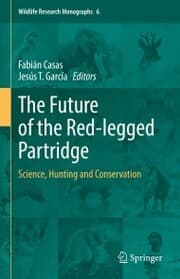
<p>There has been a recent upsurge of red-legged partridge research in most countries where the species is distributed, but no comprehensive review of that fresh and relevant multidisciplinary and international knowledge is available. In fact, this is probably the first scientific book on this important species, apart from Dick Potts excellent works on British-introduced population, or ONCFSs (Office Nationale de la Chasse et le Faune Sauvage, France) older technical reports. This is in strong contrast with a plethora of literature in hunting magazines or non-academic books, not often precise, realistic, or well informed. Thus, the book fills a great bibliography gap that could have important social impact. The common thread of the book is the prominent role a species like this may play for research, from basic physiological or ecological knowledge to socio-economics of hunting and the rural world. The general framework of the book [I1]&nbsp;is the important role that hunting and game management may play in both rural economies and biodiversity conservation, with the partridge as flag species, and also in identifying the dark drift that industrial, incorrectly deployed management, or hunting vision may have on both sustainability of resources and nature conservation at large. The final aim of the book is identifying the best future scenario, both for partridge hunters and managers as well as the general public.</p><div><br><div><div></div></div></div><div></div>
Autorenportrait
<b>Fabián Casas Arenas</b> obtained his PhD in 2008 from the Universidad de Castilla-La Mancha (UCLM). His background combines an interdisciplinary and applied approach to evaluate the effect of different human activities on wildlife and to develop sustainable management strategies for wildlife that would allow the conservation of biological diversity, especially of threatened species, and its compatibility with a rational use of natural resources by humans. He has mostly worked in agricultural ecosystems, evaluating the effects of hunting and farming practices for threatened species such as great and little bustards, pin-tailed and black-bellied sandgrouse, and gamebirds such as the red-legged partridges. Recently, he has focused his research on the relation between habitat, food availability, and diet of red-legged partridge chicks, in order to disentangle the relationship between arthropods and habitat on red-legs.<p><b>Jesús Garcia González</b> holds a PhD in zoology and physical anthropology (2003) from the Universidad Complutense de Madrid. He currently works as a scientific holder in the Spanish National Research Council (CSIC). His interests are constantly evolving and have included conservation of wild species and populations, population and community ecology, evolutionary ecology, natural history, resource partitioning, reproductive tactics, foraging theory, species diversity, invasive species, genetics of dispersal, avian parasites, population genetics, conservation genetics, and phylogeographic analyses. He has used a variety of animal models in his research, essentially birds but also mammals, mostly linked to steppes or agrarian environments. Currently, he is working on several projects that use molecular approaches and involve fieldwork, lab work, analysis of large datasets, and applied conservation activities. </p>
Weitere Details
Erschienen: 01.09.2022
Umfang: 290 S., 6.91 MB
Sprache: ENG
ISBN/EAN: 9783030963415
Umbreit-Nr.: 6571945
