
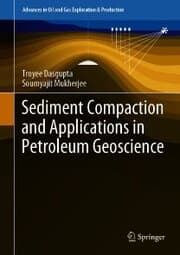
Sediment Compaction and Applications in Petroleum Geoscience
eBook - Earth and Environmental Science (R0)
Dasgupta, Troyee/Mukherjee, Soumyajit
€111.95
(inklusive MwSt.)
Verfügbarkeit: Lieferbar
Zusatztext
This book discusses how sediments compact with depth and applications of the compaction trends. Porosity reduction in sediment conveniently indicates the degree of sediments compacted after deposition. Published empirical curves- the compaction curves- are depth-wise porosity variation through which change in pore spaces from sediment surface to deeper depths e.g. up to 6 km can be delineated. Porosity is derived from well logs. Compaction curves, referred to as the Normal Porosity Profile of shales, sandstones and shale bearing sandstones of different models are reviewed along with the different mechanical and chemical compaction processes. These compaction models reveals how porosity reduces depth-wise and the probable reason for anomalous zones. Deviation from these normal compaction trends may indicate abnormal pressure scenarios: either over- or under pressure. We highlight global examples of abnormal pressure scenarios along with the different primary- and secondary mechanisms. Well logs and cores being the direct measurements of porosity, well log is the only cost-effective way to determine porosity of subsurface rocks. Certain well logs can detect overpressure and the preference of one log above the other helps reduce the uncertainty. Apart from delineation of under-compacted zones by comparing the modeled- with the actual compaction, porosity data can also estimate erosion.
Weitere Details
Erschienen: 11.04.2019
Umfang: 7.22 MB
Sprache: ENG
ISBN/EAN: 9783030134426
Umbreit-Nr.: 7166076
