
Handbook of Biobehavioral Approaches to Self-Regulation
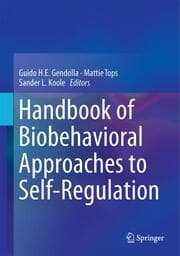
Guido H E Gendolla/Mattie Tops/Sander L Koole
€213.99
(inklusive MwSt.)
Verfügbarkeit: Besorgungstitel, Festbezug
Zusatztext
How can people master their own thoughts, feelings, and actions? This question is central to the scientific study of self-regulation. The behavioral side of self-regulation has been extensively investigated over the last decades, but the biological machinery that allows people to self-regulate has mostly remained vague and unspecified. Handbook of Biobehavioral Approaches to Self-Regulation corrects this imbalance. Moving beyond traditional mind-body dualities, the various contributions in the book examine how self-regulation becomes established in cardiovascular, hormonal, and central nervous systems. Particular attention is given to the dynamic interplay between affect and cognition in self-regulation. The book also addresses the psychobiology of effort, the impact of depression on self-regulation, the development of self-regulation, and the question what causes self-regulation to succeed or fail. These novel perspectives provide readers with a new, biologically informed understanding of self-awareness and self-agency. Among the topics being covered are: - Self-regulation in an evolutionary perspective. The muscle metaphor in selfregulation in the light of current theorizing on muscle physiology. From distraction to mindfulness: psychological and neural mechanisms of attention strategies in selfregulation. Selfregulation in social decisionmaking: a neurobiological perspective. Mental effort: brain and autonomic correlates in health and disease. A basic and applied model of the bodymind system. Handbook of Biobehavioral Approaches to Self-Regulation provides a wealth of theoretical insights into self-regulation, with great potential for future applications for improving self-regulation in everyday life settings, including education, work, health, and interpersonal relationships. The book highlights a host of exciting new ideas and directions and is sure to provoke a greatdeal of thought and discussion among researchers, practitioners, and graduate-level students in psychology, education, neuroscience, medicine, and behavioral economics.
Autorenportrait
Guido H.E. Gendolla is Professor of Psychology at the University of Geneva, Switzerland, where he holds the chair for motivation psychology and directs the Geneva Motivation Lab. He earned his diploma in psychology (corresponding to MA) and his PhD at the University of Bielefeld, Germany, and his habilitation in psychology at the University of Erlangen, Germany. Gendollas research focuses on human motivation and explicit and implicit affect and is mainly concerned with involved psychophysiological processes. Most of his recent research activity was centered on implicit influences in the self-regulation of effort. He has authored numerous publications and his research has been supported by various grants of the Deutsche Forschungsgemeinschaft and the Swiss National Funds.Mattie Tops is an Assistant Professor of Psychology at the VU University Amsterdam. He earned his diploma in psychology (corresponding to MA) at the Radboud University Nijmegen and his PhD at the University of Groningen, the Netherlands. He has published numerous articles and book chapters on the topics motivation and stress coping. Tops research focuses on stress (coping) hormones and brain mechanisms of self-regulation. His research has been supported by grants from the Netherlands Organization of Scientific Research (NWO).Sander L. Koole is an Associate Professor of Psychology at the VU University Amsterdam. He has published many articles and book chapters on the topics emotion regulation and self-regulation. He has co-edited the Handbook of Experimental Existential Psychology and special issues in Social Cognition and Cognition and Emotion. His research has been supported by grants from the Netherlands Organization of Scientific Research (NWO) and the Templeton Foundation. He has been a residential fellow of the Center for Advanced Study in Behavioral Sciences at Stanford University. Kooles research was recognized in 2011 by a Consolidator Grant of the EuropeanResearch Council, a grant that is awarded to researchers with the proven potential to become leaders in their field.
Weitere Details
Erschienen: 23.09.2014
Umfang: xiv, 421 S., 47 s/w Illustr., 11 farbige Illustr.,
Sprache: ENG
Einband: GEB
ISBN/EAN: 9781493912353
Umbreit-Nr.: 6676365
