
Hip Hop's Amnesia
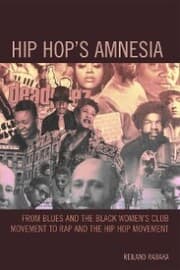
eBook - From Blues and the Black Women's Club Movement to Rap and the Hip Hop Movement
€67.95
(inklusive MwSt.)
Verfügbarkeit: Lieferbar
Zusatztext
<span><span><span>What did rap music and hip hop culture inherit from the spirituals, classic blues, ragtime, classic jazz, and bebop? What did rap music and hip hop culture inherit from the Black Womens Club Movement, New Negro Movement, Harlem Renaissance, Hipster Movement, and Black Muslim Movement? How did black popular music and black popular culture between 1900 and the 1950s influence white youth culture, especially the Lost Generation and the Beat Generation, in ways that mirror rap music and hip hop cultures influence on contemporary white youth music, culture, and politics? In</span><span>Hip Hops Amnesia</span><span> award-winning author, spoken-word artist, and multi-instrumentalist Reiland Rabaka answers these questions by rescuing and reclaiming the often-overlooked early twentieth century origins and evolution of rap music and hip hop culture.</span></span><br><span><span></span></span><br><span><span>Hip Hops Amnesia</span><span> is a study about aesthetics</span><span>and</span><span> politics, music</span><span>and</span><span> social movements, as well as the ways in which African Americans unique history and culture has consistently led them to create musics that have served as the soundtracks for their socio-political aspirations and frustrations, their socio-political organizations and nationally-networked movements. The musics of the major African American social and political movements of the 1950s, 1960s, and 1970s were based and ultimately built on earlier forms of African American movement music. Therefore, in order to really and truly understand rap music and hip hop culture we must critically examine both classical African American musics and the classical African American movements that these musics served as soundtracks for. This book is primarily preoccupied with the ways in which post-enslavement black popular music and black popular culture frequently served as a soundtrack for and reflected the grassroots politics of post-enslavement African American social and political movements. Where many Hip Hop Studies scholars have made clever allusions to the ways that rap music and hip hop culture are connected to and seem to innovatively evolve earlier forms of black popular music and black popular culture,</span><span>Hip Hops Amnesia</span><span> moves beyond anecdotes and witty allusions and earnestly endeavors a full-fledged critical examination and archive-informed re-evaluation of hip hops inheritance from the major African American musics</span><span>and</span><span> movements of the first half of the twentieth century: classic blues, ragtime, classic jazz, swing, bebop, the Black Womens Club Movement, the New Negro Movement, the Harlem Renaissance, the Bebop Movement, the Hipster Movement, and the Black Muslim Movement.</span></span></span>
Autorenportrait
<span><span>Reiland Rabaka</span><span> is an associate professor of African, African American, and Caribbean Studies in the Department of Ethnic Studies and the Humanities Program at the University of Colorado at Boulder, where he is also an Affiliate Professor in the Women and Gender Studies Program and a Research Fellow at the Center for Studies of Ethnicity and Race in America (CSERA). He is the author of ten books, including</span><span>Against Epistemic Apartheid</span><span>;</span><span>Hip Hops Inheritance</span><span>; and</span><span>The Hip Hop Movement</span><span>.</span><span>He is also the recipient of the Cheikh Anta Diop Distinguished Career Award.</span><span><br></span></span>
Weitere Details
Erschienen: 18.05.2012
Umfang: 384 S.
Sprache: ENG
ISBN/EAN: 9780739174937
Umbreit-Nr.: 9938946
